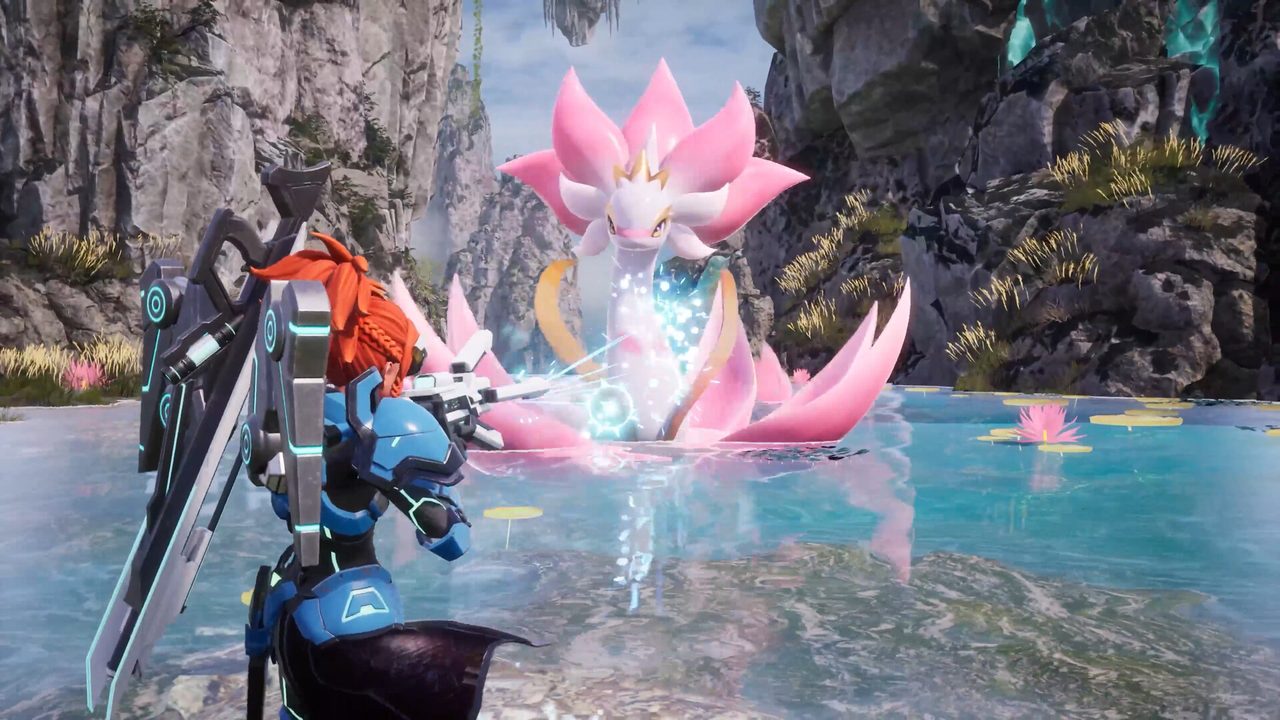
Palworld left early access on July 10, 2026, roughly a year and a half after its January 2024 launch turned it into one of the fastest-selling games of the decade on the strength of a premise that sounded like a joke: Pokemon, but you can put your creatures to work on an assembly line and, if you’re feeling it, arm them with a minigun. The 1.0 update is Pocketpair’s answer to the question of whether that premise could support a full game rather than a viral moment, and the honest answer is mostly yes, with one long-running asterisk that 1.0 did not fully erase.
The map doubled and the loop changed with it
The headline addition is the World Tree region, a new zone that opens up once you have cleared enough of the base map, paired with Sunreach, an island that floats rather than sits on the ground and requires actual traversal tech to reach. Together they roughly double the explorable space from the early access build. That matters less as raw square footage and more because of what Pocketpair filled it with: 72 new Pals bringing the roster to 287, new boss encounters tuned around the Awakening and Mutation systems, and biome-specific crafting chains that give the mid and late game a reason to keep exploring instead of turtling in your first base forever.
Awakening and Mutation are the more interesting systems mechanically. Awakening lets you push a captured Pal’s stats past its normal cap through repeated fusion with duplicates, while Mutation introduces randomized trait rolls that can meaningfully change how a Pal performs, similar in spirit to IVs and natures in the games it is obviously drawing from, but with a crafting-game’s willingness to let you see and manipulate the numbers directly. It gives Palworld a build-optimization layer that the early access version never had, where a maxed, mutated late-game Pal is a genuinely different unit from the wild-caught baseline version of the same species.
Palworld 1.0 finally has enough systems talking to each other that “just one more base upgrade” stops being a lie you tell yourself.
Traversal got real attention too. The Wing Pack glider gives you a low-commitment way to cross terrain without needing a flying Pal yet, and the path to unlocking Jetragon, the game’s marquee dragon-type mount, has been made less punishing: several of the Jetragon-related technologies now unlock at level 70 instead of level 79, and the Pal Gear crafting materials needed to actually ride it have been reduced. That is Pocketpair listening to a specific, loud complaint about grind gating and doing something about it rather than leaving it as a badge-of-honor unlock.
The multiplayer problem hasn’t gone away
Here is the part that keeps Palworld from an easy top score: co-op stability. This was the single most consistent complaint through early access, and while server performance, boss encounter handling and a string of PS5 and Xbox crash fixes have all landed in the 1.0 patch line and the v1.0.3 follow-up, connection drops after major patches remain a known, recurring issue. If you are planning to play with friends rather than solo, running your own dedicated server rather than relying on a player-hosted session is still the more reliable path in mid-2026, which is a workaround, not a fix.
PvP mode arrived as part of the broader 1.0 push, and it shows the seams of a feature added because players asked for it rather than because the game was designed around it from the start. Base building, Pal stats and crafting progression all assume a cooperative or solo pace, and none of that translates cleanly into competitive balance. It is playable. It is not why anyone should buy Palworld.
What a returning player will notice first
- Base automation is deeper: more Pal work-type specializations, better auto-assignment logic, and less time spent manually dragging Pals to the right station.
- The technology tree has been re-paced so early hours move faster and the mid-game grind that used to stall players around level 30 to 40 is smoother.
- Graphics settings and texture streaming got a pass alongside the map expansion, and load times into the new regions are noticeably shorter than the early access build’s already-decent baseline.
Verdict
Palworld 1.0 answers the fair question early access always leaves hanging, which is whether the finished game justifies the hype the unfinished one generated. The World Tree and Sunreach expansion, the Awakening and Mutation systems, and the traversal fixes all add up to a survival-crafting game with real depth underneath the joke premise. The multiplayer stability issue is the one thing keeping it from being an unreserved recommendation for the group of friends who bounced off it during early access specifically because the servers kept dropping. Play solo or host your own server, and 1.0 delivers on what it promised a year and a half ago.