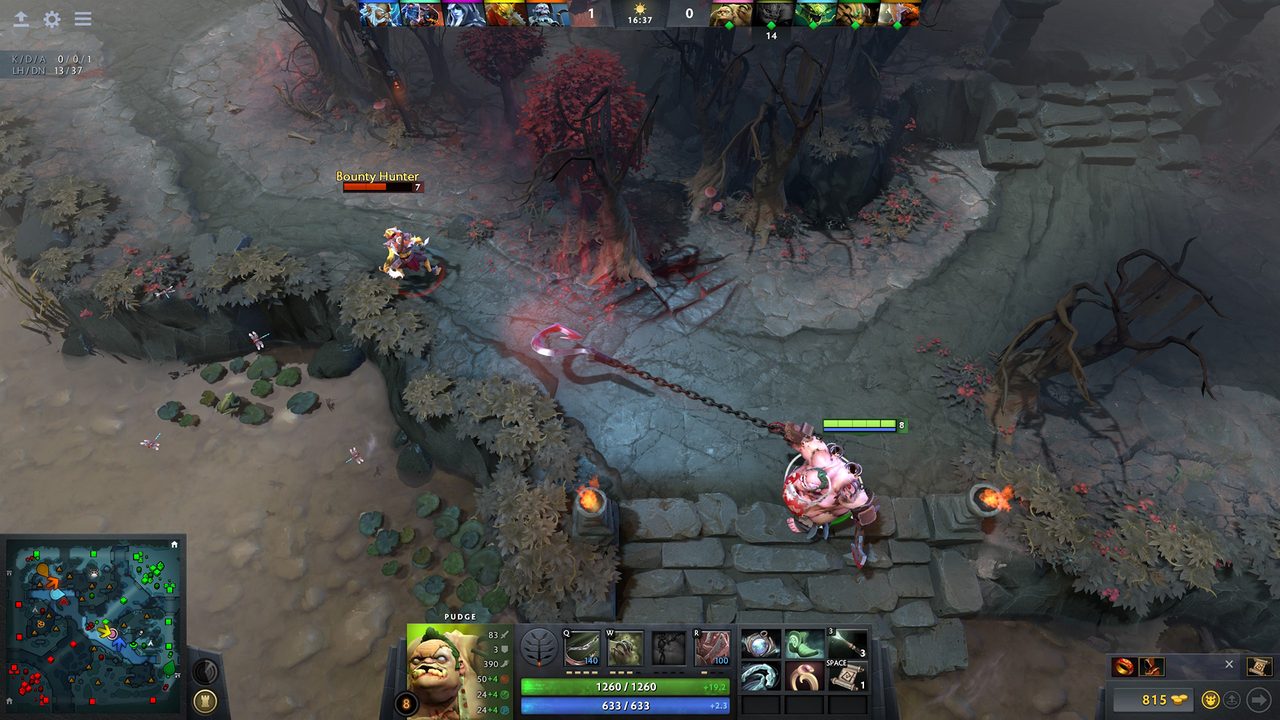
Dota 2 is not a game you review so much as a game you file a status report on. It has been out for over a decade, it changes shape every few months through gameplay patches, and the version you play in August 2026 has almost nothing in common with the version from five years ago beyond the lane structure and the two Ancients sitting in opposite corners of the map. Patch 7.41e, the current build, arrived as part of a pre-International refresh alongside Supporter Bundles and Fantasy tools, and it is as good a snapshot as any of where the game stands: deep, demanding, and still finding new problems to solve after 126 heroes.
The patch cycle is still the whole show
If you have not played in a year, the honest advice is to treat 7.41e like a new game. Valve’s design team does not do small balance tweaks so much as periodic ecosystem resets, and this one landed with the usual mix of item reworks, hero adjustments and the quiet infrastructure changes that never make a highlight reel but change how the game feels to actually play. The most concrete of those: cosmetic items now take close to zero network bandwidth once a match starts, a fix that sounds trivial until you remember what a five-man team fight with fully decked-out Immortal sets used to do to a mid-range connection. Fights that used to stutter for a fraction of a second at the worst possible moment now resolve cleanly.
That kind of unglamorous engineering work is Dota 2’s actual competitive advantage over the rest of the genre. League of Legends gets flashier marketing beats. Dota 2 gets a client that handles ten heroes’ worth of particle effects, illusions and area spells without falling over, which matters enormously when the entire genre lives or dies on whether you could actually see the skillshot that killed you.
The game rewards the hundred hours it takes before you understand why, which is exactly the problem for anyone deciding whether to spend those hundred hours.
The International still means something
Team Spirit closed out The International 2026 in Shanghai with a five-game grand final and took home the Aegis of Champions, and watching that series was a reminder of what the format still does better than almost any other esport: a single elimination bracket with best-of-five stakes, on a game where a single itemization mistake in the draft phase can cost a team the match before the first creep wave spawns. The drafting phase in particular has become its own spectator sport, with 126 heroes worth of counter-picks and synergy reads happening in real time under a strict clock.
Concurrent player numbers back up the idea that this is not a game coasting on nostalgia. Dota 2 sits as the second most-played game on Steam, with 24-hour peaks well north of 900,000 concurrent players, which for a game this old and this mechanically demanding is a genuinely unusual thing to still be true.
Where the demand tips into a real cost
- New heroes and item reworks land faster than most players can absorb them, and there is still no in-client system that explains what changed beyond a patch notes wall of text.
- The tutorial exists, teaches the absolute basics, and then drops you into a hero pool of 126 characters with almost no scaffolding for which ten are reasonable to learn first.
- Player-reported toxicity in ranked queues remains a known, long-running problem. Valve’s mute and report tools work at a technical level, but they do not fix the culture that makes a new player’s first ranked loss feel like a personal attack.
That last point is the one that keeps Dota 2 from being an easy recommendation to anyone outside the existing community. The game itself, mechanically, is extraordinary: no other title asks you to simultaneously manage last-hitting, ability sequencing, itemization, vision control and macro rotations, and then rewards genuine mastery of all five at once. But the on-ramp is still hostile in a way League of Legends solved years ago with better bot difficulty tiers and a gentler ranked ladder.
Who should actually install this in 2026
If you already play, 7.41e and the pre-International content refresh are worth logging back in for, and the network optimizations alone make team fights feel cleaner than they have in years. If you are new, go in with the expectation that your first fifty hours will be genuinely rough, that strangers in your lane will sometimes be unkind about it, and that the payoff on the other side of that is one of the deepest strategy games ever shipped for free. Dota 2 has not gotten easier to start. It has just kept getting better at the thing it already did well, which is why the people who stuck around are still here a decade later.