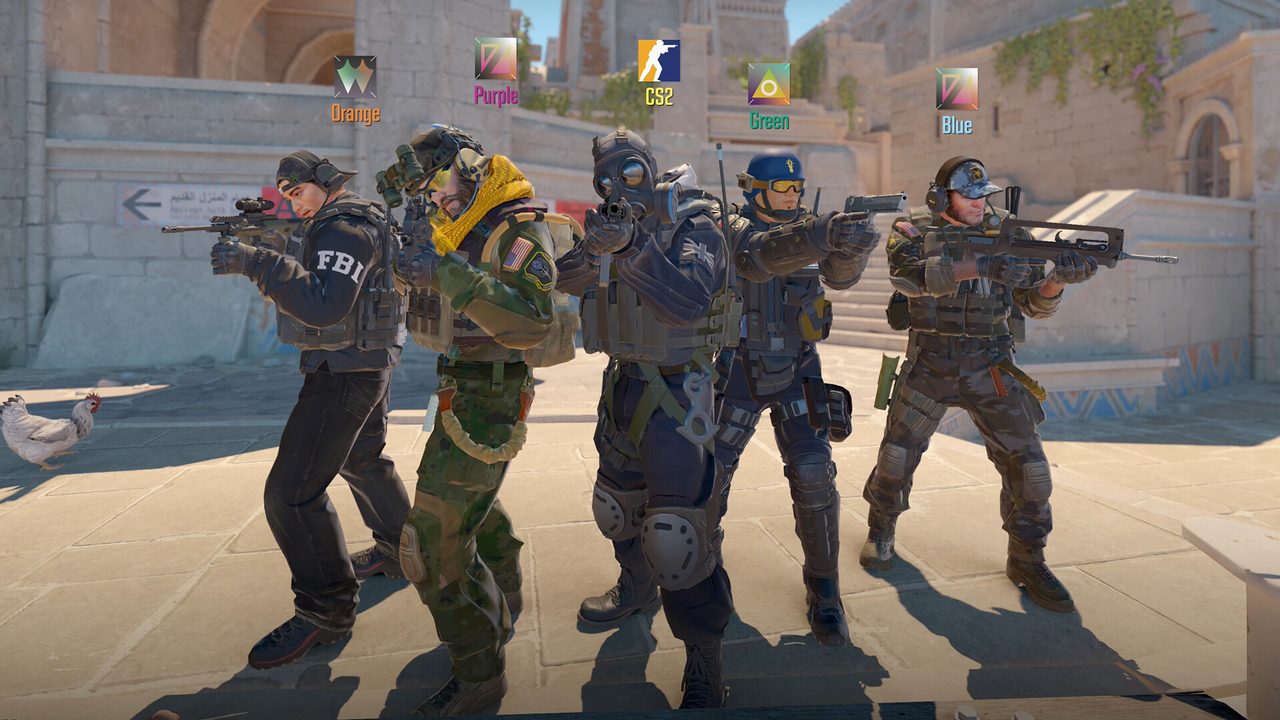
Counter-Strike 2 is the rare relaunch that actually changed how the game plays and not just how it looks. Valve swapped the entire netcode for a subtick model, rebuilt smoke grenades as volumetric objects you can shoot holes into, and reworked how bomb explosions interact with fire and smoke on the map. Two and a half years after the CS:GO shutdown, that engine work has settled in. The problem is everything Valve built around it.
The shooting is still the best reason to open the client
Subtick registration was the headline change at launch, and it has aged well. Instead of resolving your inputs on the server’s tick boundary, CS2 timestamps the moment you actually pressed the button and reconstructs the round from there. In practice that means a crouch-peek or a counter-strafe lands when you did it, not when the server got around to checking. Spray control feels the same way it did in CS:GO’s best years, which is to say punishing, learnable and entirely on you when it goes wrong.
The smoke rework is the other thing that has genuinely changed strategy. Smokes are volumetric now, they billow around corners, and a well-placed HE or bomb detonation will physically punch a hole in one that lets your team see through for a few seconds. Recent patches pushed that interaction further: a planted bomb going off now disperses nearby smoke clouds and snuffs out Molotov and incendiary fires in the blast radius, which changes how you time a legit or fake retake. It sounds like a small detail. On Mirage A it is the difference between a clean execute and eating a flash through a gap that shouldn’t exist.
The gunplay hasn’t drifted. It’s the queue in front of it that has gotten worse.
Map pool rotation has been slower than CS:GO’s, and the workshop scene that used to feed new competitive maps into the pool has quieted down. Ancient and Anubis carried the pool for a long stretch with no real new addition to replace a rotated-out map, and that stagnation is noticeable if you played through CS:GO’s later years when Valve was cycling maps in and out every few months.
Premier mode is where the game actually loses you
Here is the part every CS2 review has to say plainly: the matchmaking is not trustworthy in the middle ranks. Trust Factor is supposed to sort you away from cheaters and toxic players based on account history, playtime and reports, and it does something, but not enough. Below Global Elite, and especially in the Legendary Eagle to Supreme range, it is common to load into a Premier match against someone with an aimbot so obvious the demo takes thirty seconds to confirm. Valve’s own VAC Live system catches a real volume of these accounts after the fact, which is a tacit admission that it isn’t catching them before the match starts.
The IEM Cologne 2026 Major hub is genuinely well built. The Pick’Em Challenge is free, the Ranked Series stickers split royalties between players, teams and the tournament organizer, and the shop stays open well past the event so latecomers aren’t locked out. That is Valve doing the live-service scaffolding right. It just sits on top of a core queue experience that hasn’t earned the same praise.
What actually changed recently
- Ladder-boost inaccuracy now applies correctly when multiple players stack to boost, closing an old exploit.
- Scoreboard rendering got a performance pass, which matters more than it sounds on lower-end hardware running the source 2 UI.
- Bomb damage previews now show expected damage as soon as the plant is audible, a small clarity fix for defusers deciding whether to peek.
None of these are transformative. They are the kind of steady maintenance patch CS2 gets every few weeks, and the cumulative effect over two and a half years is a game that plays noticeably better than it did at launch, even if the launch year drew plenty of fair criticism for missing CS:GO features.
Who this is actually for
If you already play Counter-Strike, none of this changes your calculus: the game is free, the shooting is as good as it has ever been, and you already know what rank band you’re going to get cheaters in. If you are coming in fresh off Valorant or another tac-shooter, the learning curve is real and unforgiving, spray patterns take hours to internalize and there is no in-game tutorial that gets you there. Casual and Deathmatch modes exist to soften that, and they do a reasonable job, but the game’s real identity is in Premier and Competitive, and that identity currently includes a cheating problem Valve has not solved.
Counter-Strike 2 earns its reputation on mechanics alone. The gunfight, the smoke, the economy of a round, all of it is still the reference point every other tactical shooter gets measured against. What keeps it from a higher score is that Valve fixed the parts of the old game that were already good and left the parts that were already broken mostly intact.